If your topsoil has large clumps, it has a high clay content and was not screened before it was delivered. Breaking up the clumps of clay will be difficult, but eventually you will be able to smooth everything out. Rake the clumps onto a tarp and mash them with your rake. Gypsum can help break up the clumps but the best way to improve the soil over the long term is to add lots of organic matter. Tight, clay soils are loosened by mixing in organic amendments, or organic materials.
The amendments hold the clay particles apart, creating more space for air, which is critical to root growth. Add gypsum and then some compost or aged manure and rototil or dig it in. Plant your perennials and add another 2-3 inches of compost over the bare soil, digging it in at the end of the gardening season.

Add fresh mulch each year and dig it into the soil. Eventually you will have garden loam instead of clumps of clay. Working wet soil will pack soil particles tightly, leaving less room for water and air to penetrate. Compacted soil also makes it more difficult for plant roots and gardening equipment to move through the soil.

The compression forms tight clumps of soil that become hard as rocks upon drying and are difficult to break up. In addition to making it difficult for plants to grow, compacted soils also tend to drain more slowly, in turn delaying the ability to work the soil after the next rainfall. This idea rests on the notion that the roots of your plants will only go down around 20cm and so it is only the top level of the soil that needs work.

(Plus it is thought that deep digging destroys the soil structure.) You will still need to dig the plot the very first time you get it, but not from then on. Instead lightly fork and rake over the top layer of soil before each planting season and add organic matter if needed. When we talk about soil compaction, we think about the porosity, or pore size, of soil composition. Soil pores are the empty spaces between soil particles.
These allow for proper water movement, ease of plant root growth, and room for necessary nutrients and air. In compacted soil, pore sizes decrease, making it more difficult to grow healthy plants. Spring is a good time to improve compacted soil by breaking up clumps and working in soil amendments like compost, leaf mold, and sand . Mulching – Clay soils can tend to speed water runoff because water isn't absorbed as quickly into clay soils as it is other soils. Clay soils also tends to stick to the bottoms of your shoes, which can make a mess when you go indoors. By adding a layer of mulch to clay soil, you not only help keep the house clean, but can reduce the number of weeds that sprout.
As mulch decomposes,it will enhance nutrition and water retention, which ultimately allows for better plant growth. Mulch will slow down water run-off allowing clay soil more time to absorb, and store, water. A layer of mulch is also cooler than exposed soil which helps to reduce temperatures overall in the garden. Amend clay soil by adding plenty of organic material, such as well-aged compost, sawdust (but not from pressure-treated wood), composted manure or leaf mould . For example, when making a new bed, spread several inches of organic material over the area and dig it in at least eight inches deep.

When moving or adding new perennials to an existing bed, throw a shovelful of compost into the planting hole. Organic matter in soil serves as food for earthworms, insects, bacteria and fungi-they transform it to soil nutrients and humus. Through this decomposition process, materials are made available as foods to growing plants. In finely textured clay soils, organic material creates aggregates of the soil particles, improving drainage and making it easier to work.

Earthworms are especially helpful in making and keeping soil porous and well draining, said Brewer. The flat blade of the D-handle garden spade is ideal for edging beds.When I began to garden seriously, I felt the need to double dig. That's the technique in which you remove the top 12 inches of soil with a spade and loosen the subsoil with a fork.

I went out and bought an English gardening spade with an ash handle and a forged-steel blade. The shaft is short, about 36 inches, and ends with a handle shaped something like a "D." The D-shape allows you to push and pull the tool with the least amount of strain to your wrist. The short shaft allows you to put your weight on top of the tool for leverage. And the 11-inch hardened steel blade cuts through the soil easily and holds up to any amount of leveraging. In double digging, you use the spade to cut a chunk of soil and lift it carefully onto your loosened subsoil, setting it down like a piece of cake. The flat blade allows you to dig to a uniform depth.

Clay is held together by water - turning the soil and leaving it open to the frost freezes the water and breaks the clay apart. I wouldn't glysophate the lawn, lift the turf and bury it a spade depth down. The addition of grit and plenty of organic matter will improve drainage and the structure of the soil.
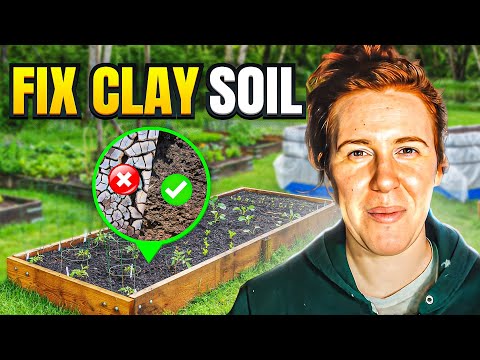
It will be hard work, but there are no quick solutions to heavy clay soils. While working with clay is tough on gardeners, the biggest issue for plants is the slow drainage. Improving its structure improves drainage; planting in raised beds made with good soil also helps.
With careful management and generous additions of organic material, clay soil will improve over time — lots of time. The soil will become more workable, but expect to spend a few years amending clay before you notice an appreciable difference. If it is in a garden bed, see if you can raise the level of the garden bed to provide better drainage. Dig sand into clay whenever you work it and you will see a gradual improvement. Add plenty of organic matter and mulch, as this helps open up clay. With lawns, leave the lawn clippings where they are mown, as this provides organic matter, and pour sand down the cracks which open up in the dry periods.
Gypsum will improve sodic clay soils, but these soils are uncommon on the North Coast. Bark, sawdust, manure, leaf mold, compost and peat moss are among the organic amendments commonly used to improve clay soil. Two or three inches of organic materials should be spread and rototilled, forked or dug into the top six or seven inches of your garden beds. Compaction is most likely to occur with heavier soils like clay and loam, but when heavy equipment is used, sandy soils can become compacted. These are soil particles that are packed closely together. The problem may be compounded by events that have happened to the soil over the course of years.

The pore spaces are reduced to the point that air and water cannot move freely and plant roots cannot grow easily into the surrounding soil. The soil could remain overly wet longer than is healthy for the plants growing there. I am looking at 2 very different tools to help me in the garden. I have partitioned the garden to give me some space for a veg patch in addition to the lawn. Currently the area is lawn, I plan to either lift or glyphosate the area to get rid of the lawn .

I then plan on adding a lot of organic multi purpose, top-soil and farmyward manure to the area. By aerating your clay soil and adding an amendment, you can break it down fast and encourage new growth. Wait until the ground's completely wet or dry, since it'll be harder to work with soil that's partially damp.

Then, turn your soil by digging up small amounts where you want to put plants to aerate it. Once you've turned the soil, mix in an amendment, like compost, biochar, manure, or a commercial soil conditioner, to add some extra nutrients. If your plants still struggle to grow, lay an extra layer of topsoil over the clay.

Sowing small seeds into large lumps of compost and manure is unlikely to succeed, so keep the most crumbly and finest organic matter for your surface layer of mulch. Likewise, an excellent time to spread compost is in autumn, as soon as the previous crops finish. Then there is time for frost to break up any lumps and for worms to start taking it down, leaving a fair tilth by spring.

It's spring, which means it's time to get your garden ready for the growing season! You cleaned up debris, leaves, and broken branches, and now it's time to think about preparing your soil for planting. Out in nature, in undisturbed forests and fields, organic debris and leaf litter remain on the soil surface to decay naturally. Decaying organic matter helps keep plants and trees healthy.
In the garden landscape, we remove this debris routinely to keep things looking tidy. Because of this, we expend great effort replacing the potentially beneficial aspects of decaying organic matter we removed in fall clean-up. These soils are made up of fine particles that can be easily compacted by treading and use of garden machinery. They are prone to washing away and wind erosion if left exposed to the elements without plant cover. However, they contain more nutrients than sandy soils and hold more water, so tend to be quite fertile. You can bind the silt particles into more stable crumbs by the addition of organic matter.

Following any of these treatments applying 6X in early spring gets your garden off to the perfect start for the season. 6X is a well-known and well-loved alternative to traditional farmyard manure which takes a lot of the effort out of spreading manure on the garden. One 15kg sack is equivalent to six or more sacks of traditional bagged farmyard manure and treats up to 184 sq metres .

After selecting and purchasing the seed, it's time to prepare the soil for the planting process. This is a very important step in knowing how to plant grass seed successfully. The tender roots of young grass plants will not grow well in compacted soils so it's essential that this step be done properly. Here are instructions for prepping the ground to overseed bare spots in an established lawn and instructions on how to prepare for planting grass seed in a large bare area. You will need to work at it over the years by repeating the process though.

Baked clay is almost impossible to break up, rotivate or dig, it's easier to spread the organic matter and grit and wait until the worms have done some of the work for you. Clay consists of minute mineral particles that tend to cling tightly together. Because there are lots of them they have a big surface area which efficiently hangs on to water and nutrients. Soils with larger particles have more air space and allow the passage of water more freely. So if you can make the soil particles in a clay soil larger you improve drainage and the texture.

How To Break Up Big Clumps Of Dirt Soil organisms can represent 3% of the dry matter in your soil. They include bacteria, fungi, mites, ants, millipedes, beetles, earthworm, slugs and snails. Soil organisms derive their energy and nutrients from breaking down plant and animal material. When digesting this material they release oxygen and mineral nutrients that plants can use. Whey they die they decompose and release more nutrients, so are valuable contributors to soil fertility. They also help improve soil structure with their tunnelling and burrowing, and by converting fine particles into larger crumbs.
Soil organisms need large supplies of organic matter to live on, warmth , moisture., oxygen and a near-neutral soil pH. In the first season or two after adding organic material to the soil, you will want to take care when watering. The heavy, slower draining soil surrounding your flower or vegetable bed will act like a bowl and water could build up in the bed. In a garden bed, the best way to introduce organic material without digging , is to apply layers on top and let nature do the work for you.
Simply pile your garden bed high with organic material – it can be wood chips, shredded paper, straw, chopped leaves, lawn clippings – whatever you can lay your hands on. It might be slow, but the wait will give you time to get to know your land before you plant. These light soils are usually low in nutrients, and lose water very quickly being particularly free-draining. You can boost the water and nutrient holding capacity of your soil by adding plenty of organic matter to bind the loose sand into more fertile crumbs. Fertilisers may also be necessary to give plants grown in sandy soils an extra boost.

Backfill with the soil you removed (if it's relatively fertile) or amend it slightly by adding organic matter. If you amend the backfill material too radically, the resulting drastic change in soil fertility and texture will discourage roots from spreading out beyond the sides of the hole. It's best to heavily amend the whole bed or border than individual planting areas wherever possible, but it's better to amend a single planting hole than do nothing at all. How to water clay soils most effectively – Watering is the biggest challenge most gardeners' face and most people over-water their plants. For clay soils, overwatering is the most common cause for plants dying. Clay soil tends to hold water for long periods of time, therefore, if your garden soil is made up of clay, you should be watering less frequently.

Spots in your yard that stay wet almost constantly are a sure sign you need to cut back on the amount of water you are applying. Check with your local county extension service to find the recommended watering rates for your area. One last thing that can be a draw back to a clay soil is if you have a boggy area, clay soils can limit the amount of air plant roots get when they are saturated. If you have a boggy area select plants that tolerate wet soils. Leave plants that need good drainage, to other parts of your garden.

Cover areas of clay soil with slower composting materials such as bark, sawdust, or ground wood chips. Use these organic materials for mulch, and, as they break down, they will work themselves into the soil below. Working these larger and slower composting materials into the soil itself could cause harm to the plants you plan to grow in that space. You are better off just letting them work in naturally over a long period of time.

After holes are poked into the soil, consider turning over sections and loosening any hard clumps. You should churn any clay soil where you intend to plant so the roots have a better chance of absorbing moisture and nutrients. Once you finish basic aeration, you can focus on adding amendments to the lawn to help the clay soil break down and become more nutritious. For an approach like this and to grow potatoes at the same time, see Naomi Schillinger's blog of summer 2012. Vegetables are hungry plants and require a soil that is well structured and full of life.

